Role
Digital Media Strategist / Deaf Access Product DesignerDigital Library / Deaf-Centered Catalog UX
Deaf Content Creator Collective catalog
A searchable catalog for Maryland DCDL that makes it easier for libraries, collaborators, and community partners to discover Deaf artists, storytellers, educators, and experts.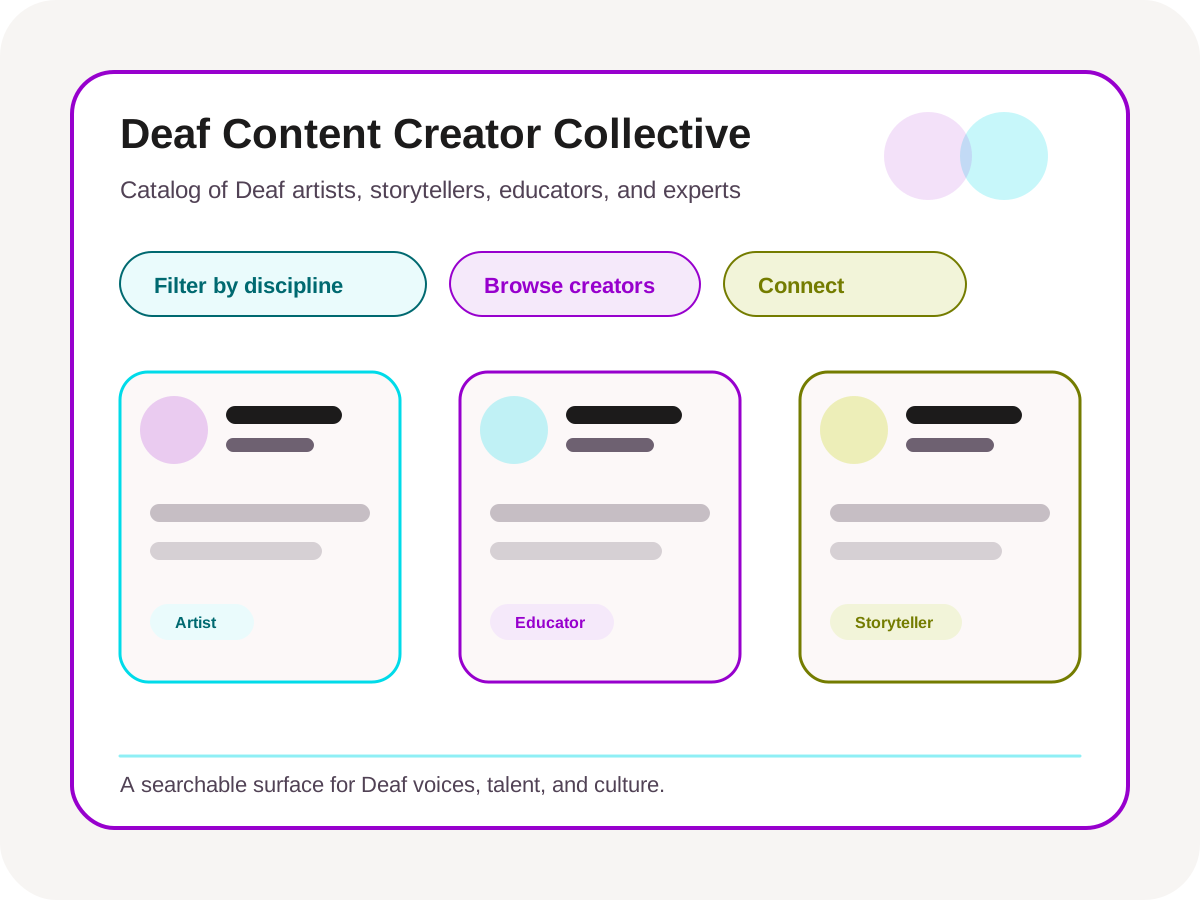
Context
Maryland Deaf Culture Digital Library / Deaf Content Creator CollectiveMethods
Catalog UX, content modeling, community discovery, taxonomy planning, accessibility strategyProblem Framing
Deaf creative expertise is too often discoverable only through personal networks.
Libraries, cultural organizations, educators, and event teams may want to feature Deaf creators, but discovery can be scattered across social platforms, word of mouth, and disconnected portfolios.
The catalog reframes creator discovery as a cultural access problem: make Deaf artists, storytellers, educators, and experts easier to find without flattening their identity, discipline, or community context into a generic directory.
UX Thinking Framework
From community need to searchable cultural infrastructure
01 / Ideation
Treat discovery as access
The work started from a practical question: how can DCDL help more people find Deaf creators to feature, collaborate with, learn from, or invite into cultural programming?02 / Research
Define who the catalog must serve
The catalog needed to support creator visibility while also helping librarians, educators, event organizers, and partners scan disciplines, expertise, and collaboration fit quickly.03 / Information Architecture
Shape creator profiles into repeatable records
The product direction required consistent profile fields, discipline categories, location context, links, and descriptive summaries so each creator could be represented clearly without making every profile feel identical.04 / Content Strategy
Balance library language with community voice
The catalog had to feel trustworthy as a library resource and still human as a creator discovery tool. The language emphasizes Deaf voices, talent, culture, collaboration, and learning.05 / Final Surface
Make browsing feel useful immediately
The final direction centers a browsable creator surface with clear calls to join the Collective or browse creators, helping the feature work for both listed creators and people looking for Deaf expertise.Design Iterations
The strongest product move was making the catalog serve both sides of the exchange.
For creators, the catalog creates a more durable visibility surface than a single social profile. For libraries and collaborators, it gives a clearer path to discover Deaf talent for programs, partnerships, education, and storytelling.
That dual audience shaped the information model: the catalog cannot only be promotional, and it cannot only be archival. It has to support connection, trust, and action.
Final Mockups
A catalog surface for Deaf voices, talent, and culture
Catalog Browse
A scannable creator surface helps visitors move from broad discovery to relevant Deaf expertise.
Discovery Network
The catalog acts as connective tissue between creators, libraries, educators, and cultural partners.
Searchable Structure
Taxonomy, profile fields, and creator summaries make the collection useful as a digital library feature.